Average Patent Grant Timelines by Country
Insights Based on 20 Years of Real Patent Prosecution Experience
Understanding how long a patent takes to be granted is a crucial factor for inventors and IP Attorneys managing international portfolios. Patent examination duration directly impacts enforcement timing, licensing strategy, valuation discussions, and competitive positioning.
The timelines presented in this article are based on real prosecution data derived from our patent practice over more than 20 years, across multiple jurisdictions and industries. Rather than relying on theoretical averages or official estimates, this analysis reflects practical, real-world grant experience.
Table of Contents
How Long Does a Patent Take? A Practical Perspective
One of the most common questions we receive is: how long does a patent take to be granted?
The answer depends heavily on jurisdiction. Patent grant time by country varies significantly due to examination systems, backlog levels, procedural structure, and applicant behavior.
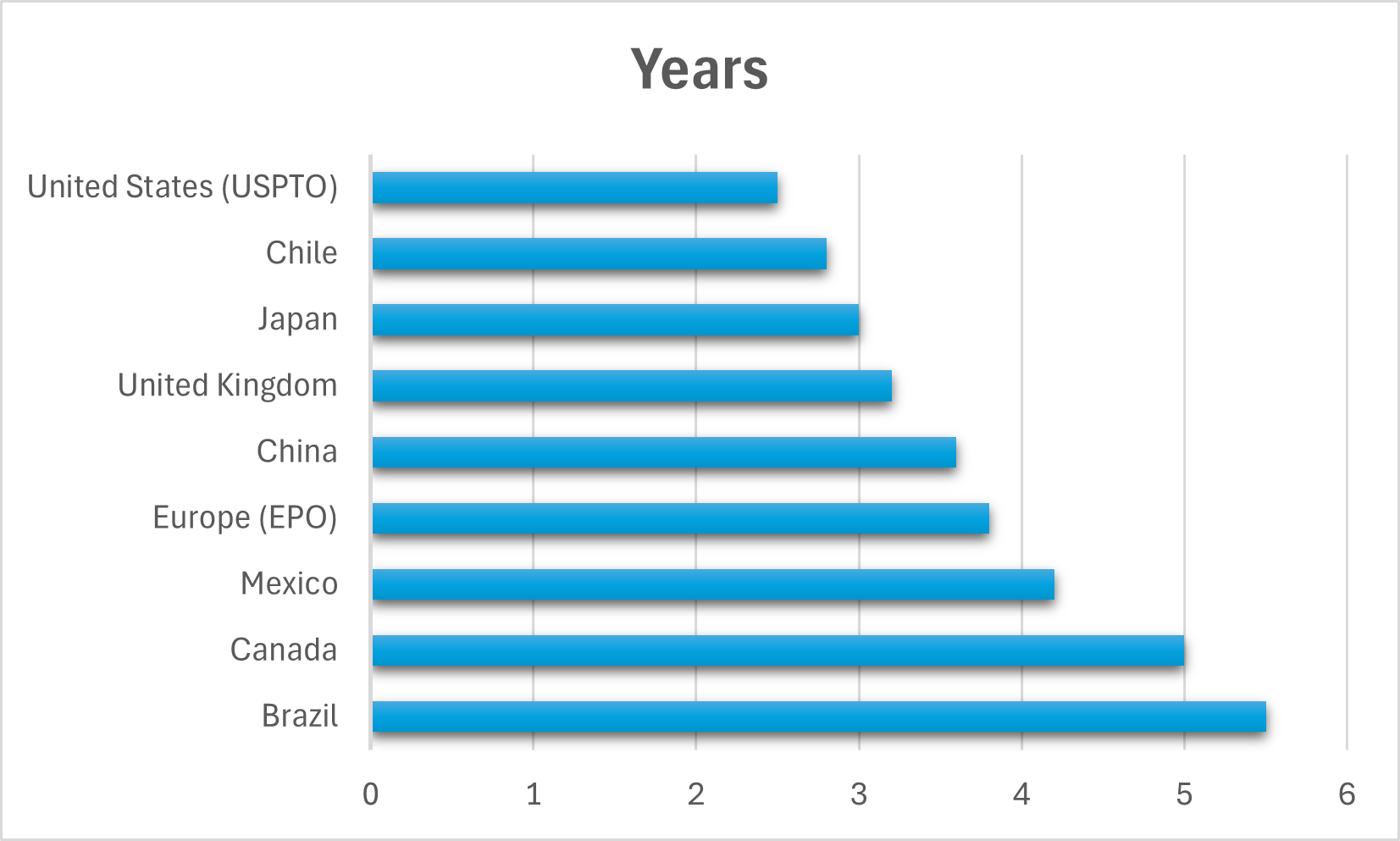
Based on prosecution data from our clients over two decades, invention patents typically show the following average ranges:
- United States (USPTO): approximately 2.5–3 years
- Chile: approximately 2.5–3 years
- Japan: approximately 3 years
- United Kingdom: approximately 3–3.5 years
- China: approximately 3.5–4 years
- Europe (EPO): approximately 4 years
- Mexico: approximately 4–4.5 years
- Canada: approximately 5 years
- Brazil: approximately 5–6 years
These figures represent practical prosecution timelines rather than official targets.
Key Insight
There is no universal patent timeline. Grant duration depends on both the patent office and the prosecution strategy adopted by the applicant.
Average Patent Grant Timeline by Country
United States (USPTO Grant Timeline)
The USPTO remains comparatively efficient among major offices. While certain technologies face congestion, examination typically advances steadily, especially when prosecution is managed proactively.
Mexico Patent Grant Time
Mexico patent grant time often exceeds four years. Substantive examination and procedural timing contribute to a longer overall pendency compared to the U.S. or U.K.
Canada Patent Grant Time
Canada frequently shows longer timelines, particularly when examination is requested later in prosecution.
China Patent Timeline
China has significantly improved efficiency in recent years, but timelines still average around three to four years depending on field and when the examination is requested by the applicant.
EPO Patent Grant Time
The EPO patent grant time reflects a rigorous examination process, often leading to longer pendency but high-quality granted claims.
Brazil Patent Backlog
Brazil historically experienced substantial backlog, and although procedural reforms have improved efficiency, average timelines still extend beyond five years in many cases.
Key Insight
Brazil, China, and Canada operate under request-based examination systems. In these jurisdictions, examination does not begin automatically upon filing. In practice, we frequently observe that applicants delay filing the examination request until close to the deadline, which can significantly extend the overall patent grant timeline. Therefore, part of the longer pendency in these countries is not only structural but also influenced by applicant timing decisions.
Why Patent Timelines Differ Across Jurisdictions
Patent pendency by country reflects structural characteristics such as:
- Whether examination is automatic or requires a formal request
- Backlog volume within specific technical fields
- Examiner workload distribution
- Formality review intensity
- Administrative processing time between procedural stages
For example, request-based examination systems can significantly influence timeline outcomes. If examination is requested early, prosecution may begin promptly. If the request is filed near the deadline, overall grant time increases substantially.
Likewise, offices with historically high filing volumes may experience longer queue periods before substantive examination begins.
Key Insight
Patent examination duration is not solely determined by the office, it is also shaped by procedural decisions made during prosecution.
What Actually Delays a Patent? Practical Factors from Real Prosecution
Beyond structural differences between patent offices, real-world prosecution experience shows that applicant-driven factors often play a significant role in extending timelines.
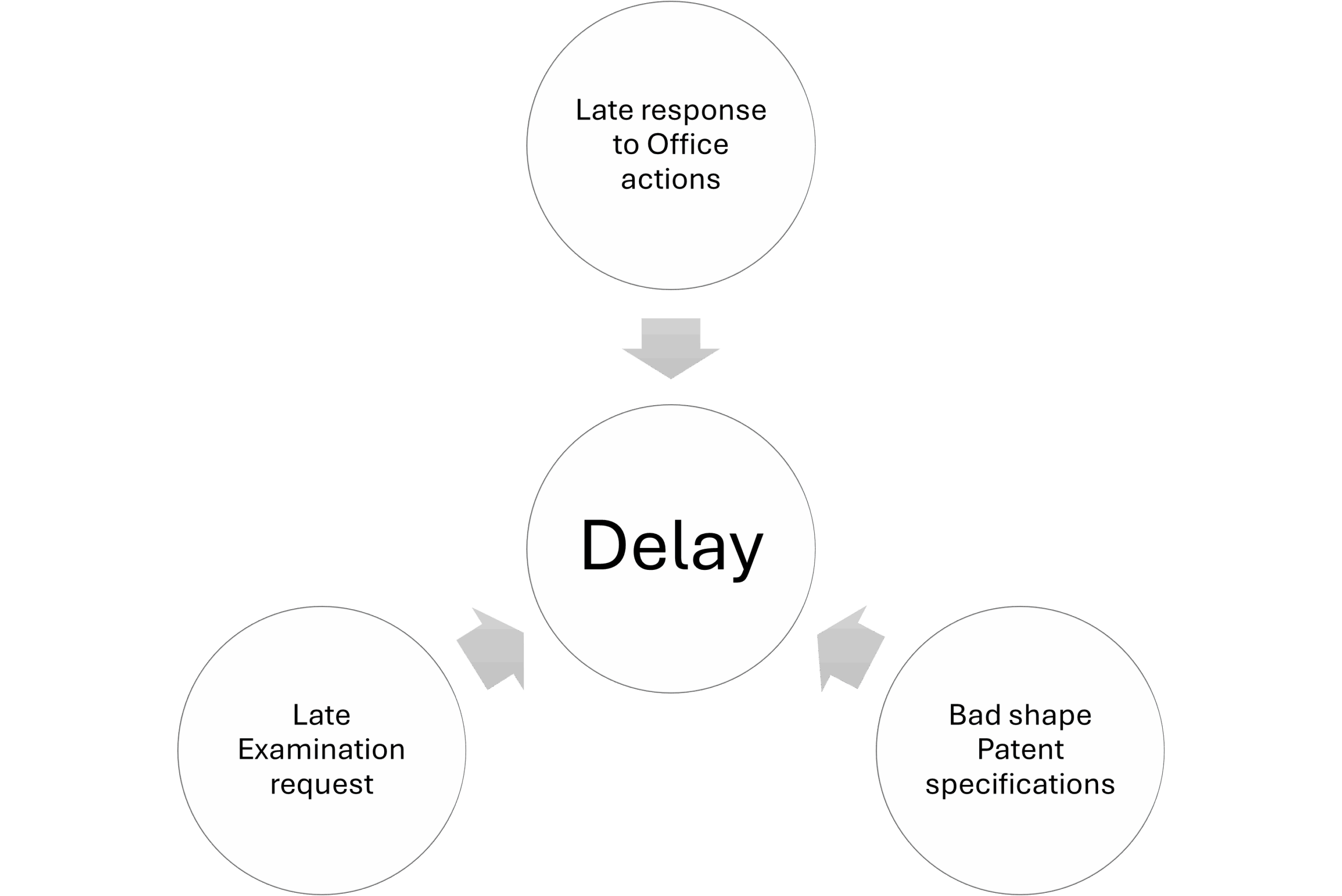
One common cause of delay is the timing of examination requests. In jurisdictions where examination must be formally requested (such as Canada, Japan, or the EPO), it is common for applicants to wait until close to the deadline before requesting examination. While understandable from a cost-management perspective, this decision can add years to the total patent grant timeline.
Similarly, responses to Office Actions are frequently filed near the end of the allowable response period. This is often financially motivated, as clients must balance prosecution costs with budget cycles. However, when responses are consistently filed at the deadline, each examination cycle adds additional months to the overall pendency.
Another significant factor is the quality of the original patent specification. When applications are drafted with insufficient technical clarity, ambiguous claim structure, or inadequate support in the description, examiners may issue multiple Office Actions before the application is placed in proper condition for allowance. In some cases, poorly structured claims require substantial amendment rounds simply to clarify scope before substantive examination can meaningfully progress.
Applications entering national phase from the PCT can also face delays if they require adaptation to local formal requirements or claim restructuring to align with jurisdiction-specific practice.
Additional delay factors may include:
- Late submission of required formal documents
- Priority document corrections
- Inventorship discrepancies
- Claim amendments introducing new clarity issues
- Examiner reassignment during prosecution
- Changes in local patent law or examination guidelines
In practice, prosecution management discipline significantly influences total pendency. Active portfolio monitoring, early examination requests, and high-quality drafting at the outset consistently reduce overall grant duration.
Key Insight
Patent delays are often not caused solely by the patent office. Strategic timing decisions, drafting quality, and prosecution management play a decisive role in overall patent pendency.
Strengthen Your Global IP Strategy with Informed Timing Expectations
Patent timelines directly influence enforcement planning, licensing negotiations, and valuation milestones.
Understanding realistic patent grant time by country allows inventors and IP Attorneys to:
- Align commercialization timing with expected grant dates
- Anticipate backlog-sensitive jurisdictions
- Budget prosecution more accurately
- Improve drafting quality to minimize examination cycles
A disciplined prosecution strategy — combined with awareness of jurisdiction-specific timing patterns — can materially improve overall portfolio efficiency.
At Patentarea, we support inventors and IP Attorneys in navigating international patent filing processes with a data-driven and experience-based approach developed over more than 20 years of global prosecution practice.

Schedule a call with one of our patent specialist
Our experts help you navigate international patent timelines, optimize examination strategy, and manage prosecution efficiently across jurisdictions.