PCT National Phase Deadlines: “30 vs 31 Months” & Key Countries
An international (PCT) patent application gives applicants time to decide where to seek protection, but that time is not unlimited. Missing one of the PCT national phase deadlines can mean losing patent rights in a country altogether, so it is worth understanding how these deadlines work well before the international phase ends.
This guide explains the general 30-month rule, the offices that allow 31 months, the few exceptions that still apply shorter periods, and the options that may exist if a deadline has already passed. WIPO publishes the official, up-to-date list of national phase entry deadlines for every PCT contracting state in its PCT time limits table, which should always be the final reference before acting.
What Is the PCT National Phase?
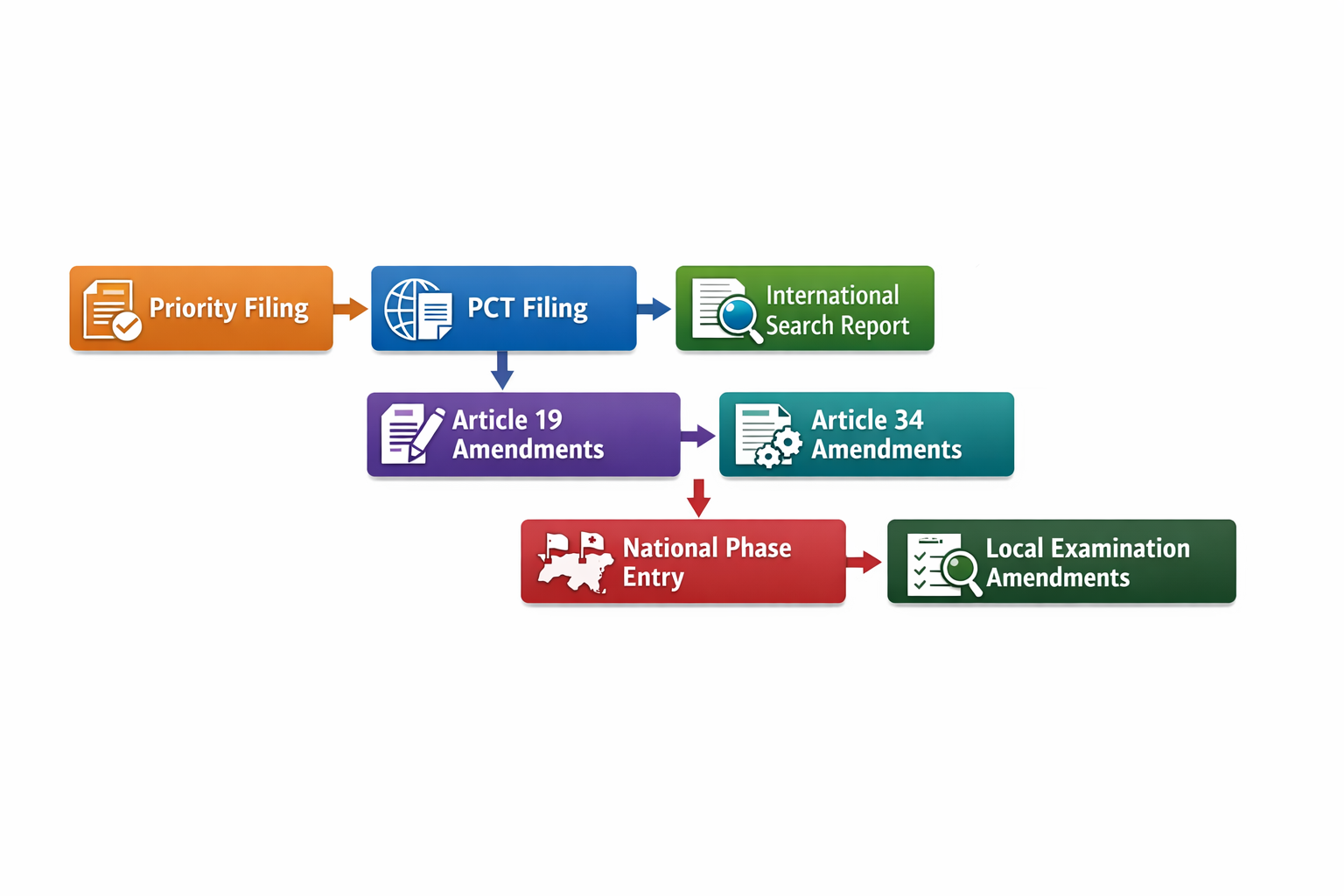
The PCT procedure has two stages. During the international phase, a single application is filed, searched and, optionally, examined under the Patent Cooperation Treaty. If you are new to the system, our International (PCT) Patent Applications Full Guide explains each step of the international phase.
The PCT itself does not grant patents. To obtain protection, the applicant must enter the national (or regional) phase in each country or regional office where a patent is wanted. Entering the national phase usually requires:
- paying the national or regional filing fees;
- filing a translation of the application, where the office requires one; and
- appointing a local patent attorney, which is mandatory for foreign applicants in most countries.
All national phase deadlines are counted from the earliest priority date, not from the international filing date. For an application that claims priority from an earlier national filing, the clock therefore starts with that first filing.
PCT National Phase Deadlines: The 30-Month Rule
Most PCT contracting states apply a deadline of 30 months from the priority date to enter the national phase. This includes several of the most frequently chosen jurisdictions:
| Office | Deadline from priority |
|---|---|
| United States (USPTO) | 30 months |
| China (CNIPA) | 30 months (32 months with a late-entry surcharge) |
| Japan (JPO) | 30 months |
| Canada (CIPO) | 30 months (42 months with a late-entry fee) |
| Brazil (INPI) | 30 months |
| Mexico (IMPI) | 30 months |
Some of these offices also allow certain formal requirements, such as a translation, to be completed shortly after entry, provided the application is entered on time. These additional periods differ from country to country and should not be confused with an extension of the entry deadline itself.
Because national phase entry often involves translations and local counsel, it is advisable to give instructions to foreign attorneys several weeks before the 30-month date.
Offices That Allow 31 Months
Some offices give applicants an additional month. The best-known examples are:
| Office | Deadline from priority |
|---|---|
| European Patent Office (EPO) | 31 months |
| Australia (IP Australia) | 31 months |
| South Korea (KIPO) | 31 months |
| India | 31 months |
| Eurasian Patent Office (EAPO) | 31 months |
The extra month can be useful, but relying on it for all countries is risky. When several countries are involved, it is usually safer to plan around the earliest applicable deadline and treat 31-month offices as a small buffer rather than as the default.
You may also be interested in:
- Patent Filing in the European Union: A Comprehensive Guide
- Patent Filing in the United States: A Comprehensive Guide
- Patent Filing in China: A Comprehensive Guide
Exceptions: Offices With Shorter Periods
A small number of contracting states have kept a reservation under Article 22 of the PCT. For these offices, the national phase deadline may still be 20 months from priority unless a demand for international preliminary examination (Chapter II) was filed in time, in which case the longer period applies.
These exceptions affect very few countries, but they are easy to overlook. Our article on PCT Chapter I and Chapter II explains how the demand works, and the WIPO time limits table indicates which offices are affected at any given time.
Late Entry and Reinstatement
If a national phase deadline is missed, rights are not always lost immediately. Depending on the country, options may include:
- late entry with a surcharge, available in some offices for a limited period after the deadline;
- reinstatement of rights under PCT Rule 49.6, where the failure was unintentional or occurred despite due care, usually requested within a strict time limit; and
- further processing or similar remedies in certain regional systems.
The criteria, fees and time limits vary considerably from office to office, and some countries do not offer any remedy at all. Reinstatement requests may also require a detailed explanation and supporting evidence. These options should be treated as a safety net, not as part of the filing strategy.
Planning Costs and Timing
National phase entry is usually the most expensive moment in the life of a PCT application, because official fees, attorney fees and translations arise in several countries at once. Understanding the overall budget in advance helps applicants choose countries realistically.
It is also worth considering how long examination will take once the national phase begins, since some offices grant patents much faster than others.
Practical Checklist Before the National Phase
Before the 30 or 31-month deadline, applicants should:
- confirm the earliest priority date and calculate each national deadline;
- check whether any selected office applies a shorter period or special requirement;
- decide which countries are commercially relevant;
- request quotes and confirm translation requirements early;
- review the international search report and written opinion, and consider amendments; and
- verify each deadline in the official WIPO PCT time limits table mentioned above before acting.
Plan Your National Phase Entry Early
PCT national phase deadlines are among the most important dates in the life of an international patent application. Knowing which offices apply 30 or 31 months, which still apply shorter periods, and which allow late entry helps applicants avoid unnecessary costs and the risk of losing protection.
Starting the planning process a few months before the deadline leaves time to compare costs, prepare translations and instruct local attorneys without last-minute pressure.

Get your Patent Filed Now
Contact us today for a free consultation